
Recent reports regarding ICE enforcement actions over New Year's weekend have created understandable concern and confusion in the community. While the full details of these operations are still developing, there are important facts and general enforcement trends that individuals should be aware of.
I. ICE is primarily targeting individuals with final orders of removal
In many of these enforcement actions, ICE has focused on individuals who already have final orders of deportation. A final order means that an immigration judge has already ordered removal, and in most cases, all appeals have been exhausted or waived.
II. Current enforcement priorities
ICE enforcement priorities generally include the following categories:
1. Individuals with criminal convictions or national security concerns
This includes alleged gang members, individuals suspected of terrorism, and those with certain criminal convictions. Of particular importance are individuals with:
- An “aggravated felony” conviction
- A felony conviction
- Certain misdemeanor convictions that may still carry immigration consequences, even if labeled “minor” under state law
It is important to understand that immigration law does not always treat criminal convictions the same way criminal courts do. Even cases that were reduced, amended, or expunged at the state level may still carry immigration consequences. Anyone with a criminal history should consult an experienced immigration attorney to determine whether they may still fall into a removable category under federal law.
2. Individuals with multiple or specific types of convictions
This may include:
- Three or more misdemeanor convictions (excluding traffic offenses)
- A single conviction involving domestic violence, DUI, drug offenses, sexual offenses, firearm offenses, or drug trafficking
- Individuals who have served 90 days or more in custody for certain offenses
- Individuals who entered the United States on or after January 1, 2014 (in certain enforcement categories)
3. Individuals with prior removal orders
This includes individuals who have a final order of removal entered on or after January 1, 2014.
III. Some individuals may also be subject to Orders of Supervision
In some cases, individuals taken into custody were previously complying with ICE supervision requirements, including regular check-ins. Even compliance with these requirements does not eliminate the possibility of enforcement action.
What you should know if you or a loved one may be at risk
I. Know your rights
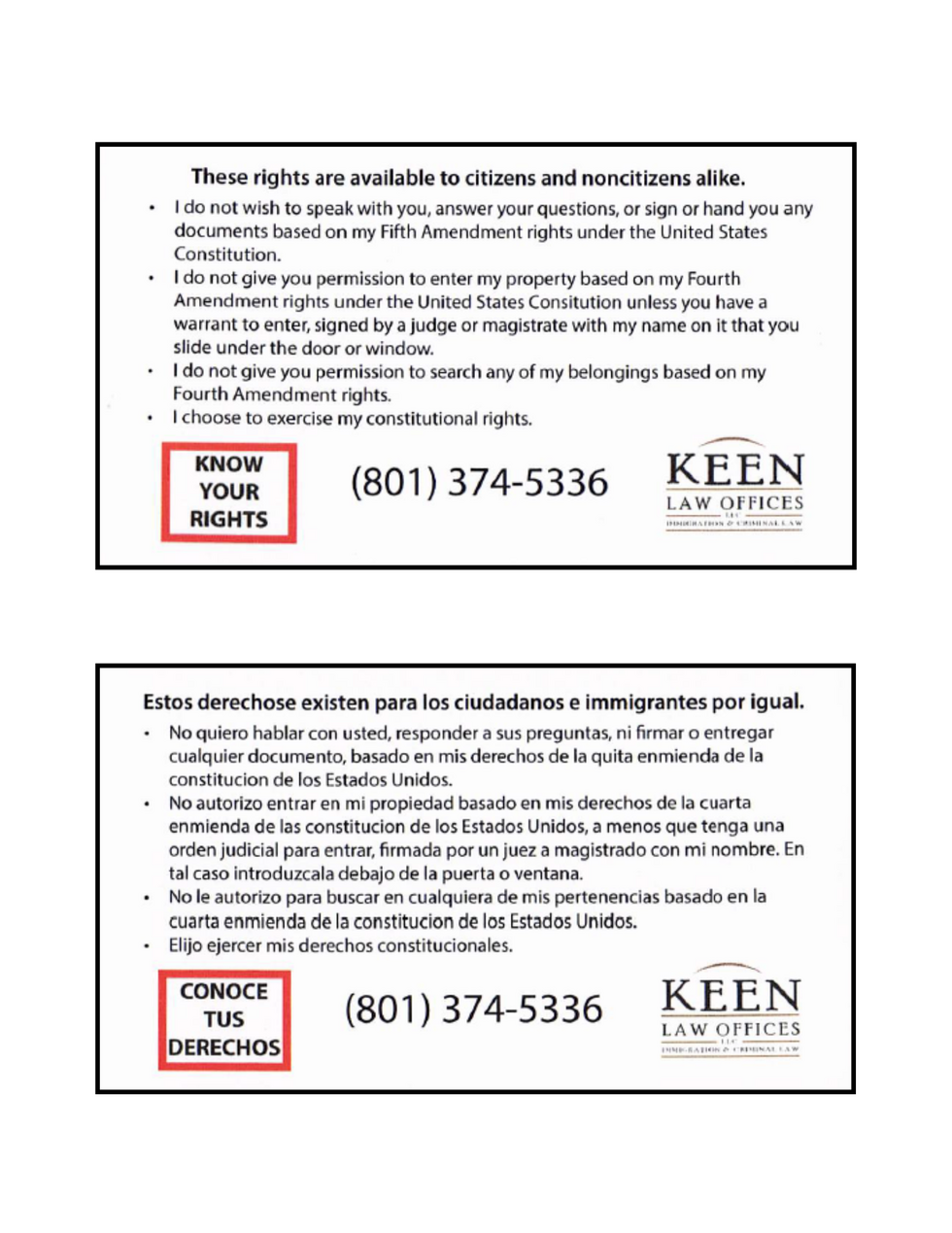
The Fourth Amendment protects individuals in the United States from unreasonable searches and seizures. This applies to all persons physically present in the U.S., regardless of immigration status.
If ICE comes to your home, you are generally not required to open the door unless officers present a valid warrant signed by a judge. You may ask them to slide the warrant under the door or show it through a window before engaging further.
If you are approached at work and are told you are free to leave, you may do so.
II. Do not volunteer information
You also have rights under the Fifth Amendment. You are not required to answer questions from ICE officers without a warrant or legal representation.
It is important that you and your family understand this clearly:
- Do not provide information beyond what is required
- Do not explain your history or situation voluntarily
- If you are required to respond, keep answers brief and direct
These interactions are not the appropriate time to provide background details or explanations beyond what is legally necessary.
III. Stay calm and comply physically
If ICE has a valid warrant, they may take you into custody. While this is understandably stressful, resistance or confrontation can make the situation worse.
Remaining calm and respectful does not mean giving up your rights. It simply ensures that the situation does not escalate unnecessarily and may positively impact issues such as bond or release eligibility later in the process.
Being cooperative in the moment does not determine your long-term immigration outcome. Many individuals are still eligible for bond, release, or legal relief after being detained.
If you have a criminal history, you should seek legal advice
If you have a DUI, domestic violence conviction, or any other criminal record, you should speak with an immigration attorney to understand whether post-conviction relief, expungement, or other legal remedies may help in your specific situation.
In some cases, relief is available. In others, options may be limited but understanding your position early is critical.
If someone is arrested by ICE
If you or a loved one is detained, contact an experienced immigration attorney immediately. Time matters. In many cases, there are legal strategies that may lead to release on bond or eligibility for relief from removal.
Even in difficult cases, having counsel involved early can make a meaningful difference in how the case proceeds.
Our office is prepared to act quickly in detained cases and provide immediate guidance on what options may be available under the law.
Final note
ICE enforcement actions can feel unpredictable and overwhelming. However, understanding how enforcement priorities work and knowing your rights can significantly change how you respond if you or someone you love is affected.
Here is a helpful card to slip under the door to an ICE Agent if they come to your door without a warrant

Comments
There are no comments for this post. Be the first and Add your Comment below.
Leave a Comment